CASTLE OF TRAPS
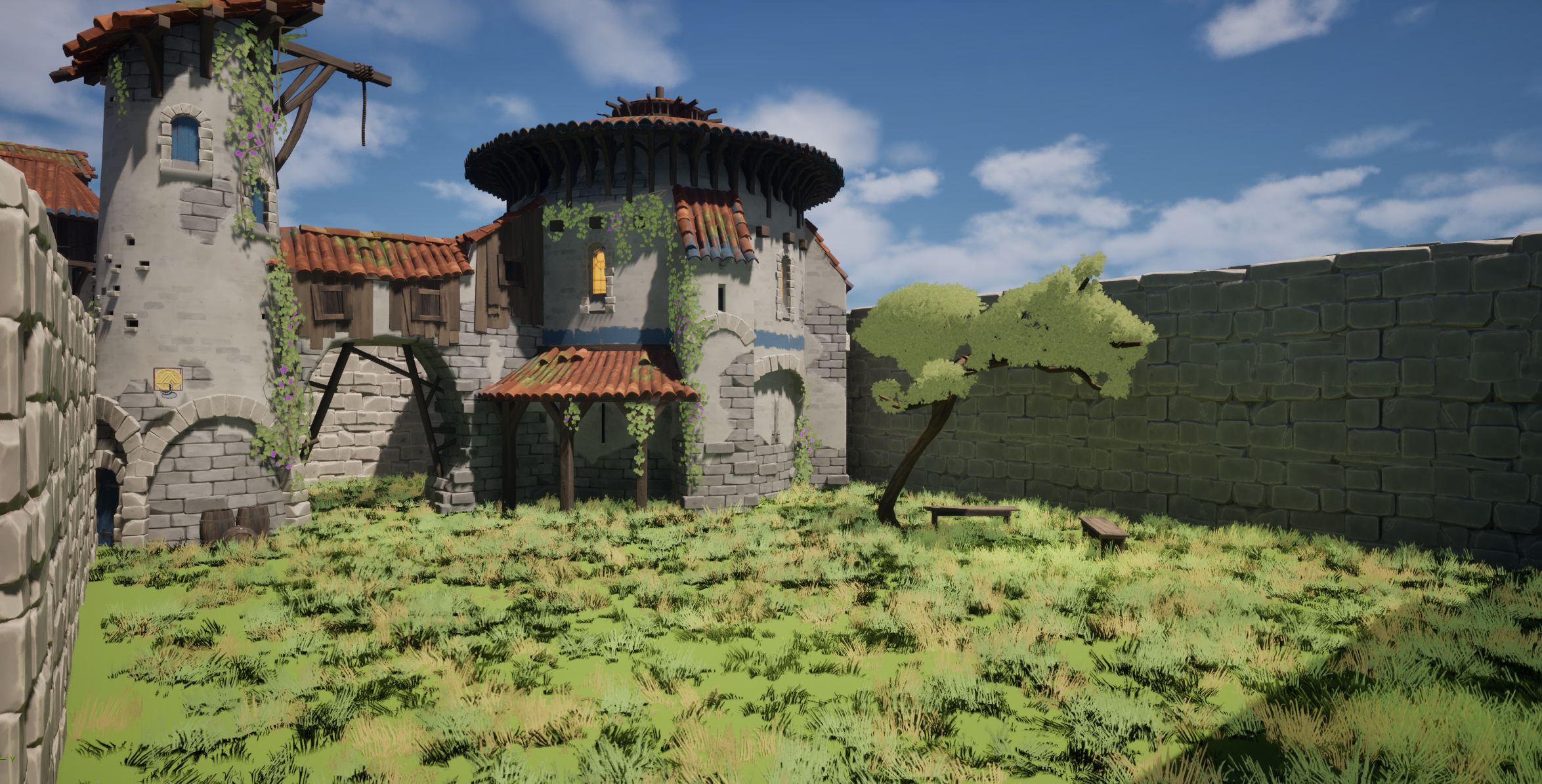
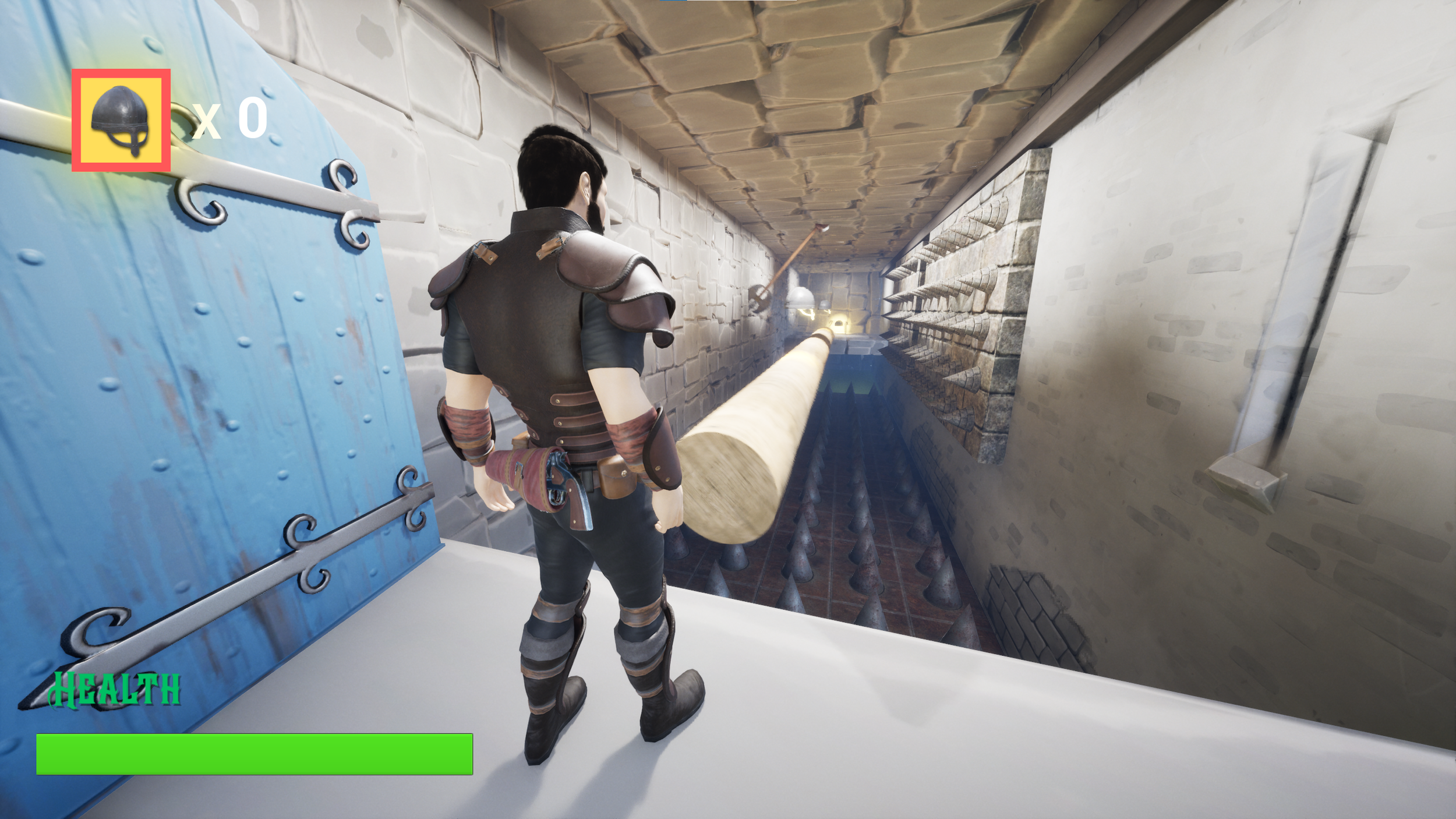
Castle of Traps is a small UE5 demo I built independently during a game jam to showcase my Level Design, Blueprint Programming, and Prototyping skills. The game is a linear, trap-based challenge where players navigate hazards, collect medieval helmets, and reach the final open area of the castle.
QUICK BREAKDOWN
Designed and built in under 14 hours during a game jam.Fully solo project: all gameplay logic, traps, layout, lighting, and flow by me.Created to demonstrate:Strong Blueprint scripting abilitiesUnderstanding of level pacing and difficulty rampingAbility to design readable but challenging environments
Uses darker lighting intentionally to increase tension and force players to read environmental cues.Helmet collectibles encourage exploration and teach players risk-reward decision making.
FEATURES AND DOCUMENTATION
CLICK TO DOWNLOAD PROJECT
Blueprint ProgrammingModular trap systems: collapsing floors, closing spikes, rotating blades, moving saws, spike pillars.Timeline-based motion, collision volumes, damage application, respawn logic.Interaction systems (doors), health manager, collectible logic, and exit triggers.
Level DesignLinear level structured around learn → test → combine progression.Difficulty escalates by stacking previously learned mechanics.Clear player flow with intentional lighting and silhouettes to guide attention.Reward space at the end with optional high-skill parkour challenges.
Trap Sequence HighlightsCrumbling Floor Bridge: teaches timing + risk-reward through center collectible.Closing Wall Spikes: introduces pressure + vertical movement.Revolving Blade Corridor: tests prediction and hazard reading.Rotating Log Over Spikes: requires precision and momentum control.Ground Saws: multi-directional avoidance.Spike Pillar Chamber: layered hazards + limited visibility = skill test.
What I Learned
Improved my ability to scope and execute a full gameplay loop within strict time constraints.
Strengthened my skills in rapid prototyping, including fast iteration of block-outs, movement metrics, and encounter spacing.
Gained hands-on experience building modular and scalable Blueprint systems suitable for reuse across different trap types.
Enhanced my understanding of encounter pacing, including anticipation cues, failure punishment, reward placement, and player flow metrics.
Learned how lighting, contrast, and silhouette readability affect player decision-making and trap recognition in real time.
Developed better intuition for safe zone placement, linearity control, and critical path clarity.
Realized the value of cross-disciplinary collaboration for more complex mechanics (e.g., AI systems, multi-layered interactions, narrative integration), helping me better understand scope boundaries for solo LD work.